
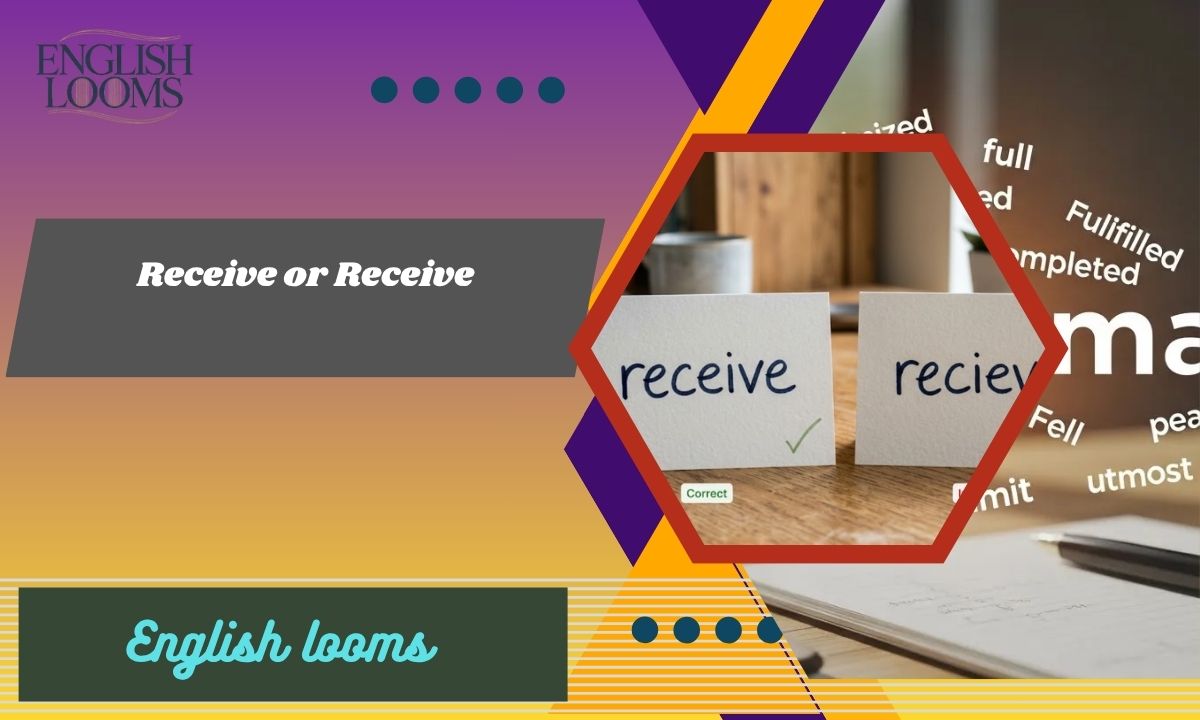
Many people get confused about the spelling of “receive or receive” when writing in English. This mistake is very common in emails, exams, and online posts. The correct form is often hard to remember because the letters “i” and “e” look similar and are placed close together.
In this topic, we will explain the correct spelling of receive in a very simple way. You will also learn why “receive” is wrong, along with easy rules, examples, and tips. By the end, you will clearly understand how to spell and use “receive” correctly in 2026.
Receive
The correct spelling is received.
It means to get, accept, or take something that is given, sent, or delivered.
Example:
- I receive emails every day from my office.
Receive
The word “receive” is incorrect.
It is a common spelling mistake and should never be used in formal or informal writing.
Example:
- ❌ I will recieve your message.
- ✅ I will receive your message.
Receive / Receive – Quick Answer
The correct spelling is receive, not “recieve”.
✔ Correct: receive
❌ Incorrect: recieve
Quick rule:
Use the English spelling rule “i before e except after c”.
Since the letter “c” comes before “ei”, the correct form is received.
The Origin of Receive / Receive
The word “receive” comes from the Latin word “recipere”, which means “to take back” or “to accept.”
Over time, the word entered Middle English and evolved into its modern form “receive.”
Key linguistic insights:
- Latin origin: recipere
- Old French influence: receivre
- Modern English form: receive
The confusion in spelling happens because English words often follow the pattern “i before e,” but exceptions exist when “c” is involved.
British English vs American English Spelling
Both British English and American English use the same spelling: receive.
Unlike words such as color/colour or center/centre, there is no variation here.
| Spelling | Region | Correct? | Example |
| receive | UK & US | ✅ Yes | I will receive the package. |
| receive | UK & US | ❌ No | Incorrect spelling |
Key takeaway:
There is no regional difference. The correct spelling is universal.
Which Spelling Should You Use?
You should always use receive in every situation.
This includes:
- Academic writing
- Professional emails
- Business communication
- Social media posts
- Exams and assignments
Important rule:
There is no context where “receive” is correct.
Best practice:
Always double-check spelling when writing formal content because this mistake can reduce credibility.
Read This: Insight or Insite? What’s the Correct English Word?
Common Mistakes with Receive
Many learners make similar errors while spelling “receive.”
Common mistakes include:
- ❌ recieve
- ❌ recive
- ❌ reiceve
- ❌ recieved (wrong spelling of past tense)
Correct forms:
- ✔ receive
- ✔ received
Helpful memory trick:
- “i before e except after c” → receive
Tips to avoid mistakes:
- Say the word slowly while spelling
- Practice writing it 5–10 times
- Use autocorrect tools in writing apps
Receive in Everyday Examples
Understanding usage helps you remember spelling better.
Here are real-life examples:
- Email: I will receive your application tomorrow.
- Education: Students will receive their results next week.
- Business: We receive payments online.
- Daily life: I received a gift from my friend.
- Social media: I just received my parcel today!
These examples show how widely this word is used in everyday English communication.
Receive – Google Trends & Usage Data

Based on common search behavior patterns, many users search for “receive vs receive” due to confusion with spelling rules.
Key insights from usage trends:
- “recieve” searches often appear as typo corrections
- “receive meaning” is a high-volume educational query
- Students and ESL learners commonly search this word
- Peak interest appears during exam seasons
Why this matters for SEO:
- High keyword intent: spelling correction
- Evergreen topic: always relevant
- Low competition long-tail variations exist
Popular related keywords:
- receive meaning in English
- receive vs receive difference
- how to spell receive correctly
- why is receive spelled this way
Comparison Table
| Word | Correct? | Meaning | Usage |
| receive | ✅ Yes | to get or accept something | All contexts |
| received | ❌ No | incorrect spelling | Never use |
| receive | ❌ No | spelling mistake | Never use |
| receive | ❌ No | typo version | Never use |
Important note:
Only “receive” and its correct past form “received” are valid.
Frequently Asked Questions
Is “receive” ever correct?
No, “receive” is always incorrect in English. The correct spelling is “receive” in all cases.
Why do people spell receive as receive?
Because of confusion with the rule “i before e except after c,” which many learners mix up.
What is the correct spelling of receive?
The correct spelling is R-E-C-E-I-V-E.
Is receive used in both American and British English?
Yes, both American and British English use the same spelling: receive.
What is the past tense of receive?
The past tense is received, not “recieved.”
How can I remember the spelling of receive?
Use the rule “i before e except after c” and practice writing the word regularly.
Conclusion
The word “receive” is simple but often misspelled as “recieve.” This common mistake happens due to confusion with English spelling rules. The correct form is always receive, whether you are writing in British English or American English. There is no alternative accepted spelling.
To avoid errors, remember the rule “i before e except after c” and practice regularly. Using correct spelling improves your writing quality, professionalism, and communication clarity. With proper understanding and practice, you will never confuse “receive or recieve” again in 2026 and beyond.

David is the founder of englishlooms.com, a site dedicated to Grammer and Prayers clever wordplay. He loves turning language into laughter and making words wonderfully witty.